Commercial Landscaping in Beachwood: 3 Ways a Modern Exterior Boosts Tenant Retention and Safety
If you manage commercial property in Beachwood, Ohio, you already know the competition is fierce. With major office parks along I-271, retail centers on Chagrin Boulevard, and a steady influx of new developments, standing out isn't optional, it's essential for survival.
Your landscaping isn't just about aesthetics. It's a strategic investment that directly impacts your bottom line through tenant retention, liability reduction, and long-term property value. When tenants see well-maintained grounds every single day, they're making a subconscious calculation about whether to renew their lease or start looking elsewhere.
Let's break down three specific ways modern commercial landscaping transforms Beachwood properties from "just another office building" into places where businesses actually want to stay.
1. Professional Curb Appeal That Keeps Tenants From Looking Elsewhere
First impressions aren't made in the lobby, they're made in the parking lot.
When a prospective tenant or their clients pull into your property, the landscaping speaks before anyone says a word. In Beachwood's competitive commercial market, where newer Class A buildings are constantly raising the bar, dated or neglected exterior spaces send a clear message: management isn't investing in this property.
What Modern Landscaping Actually Looks Like
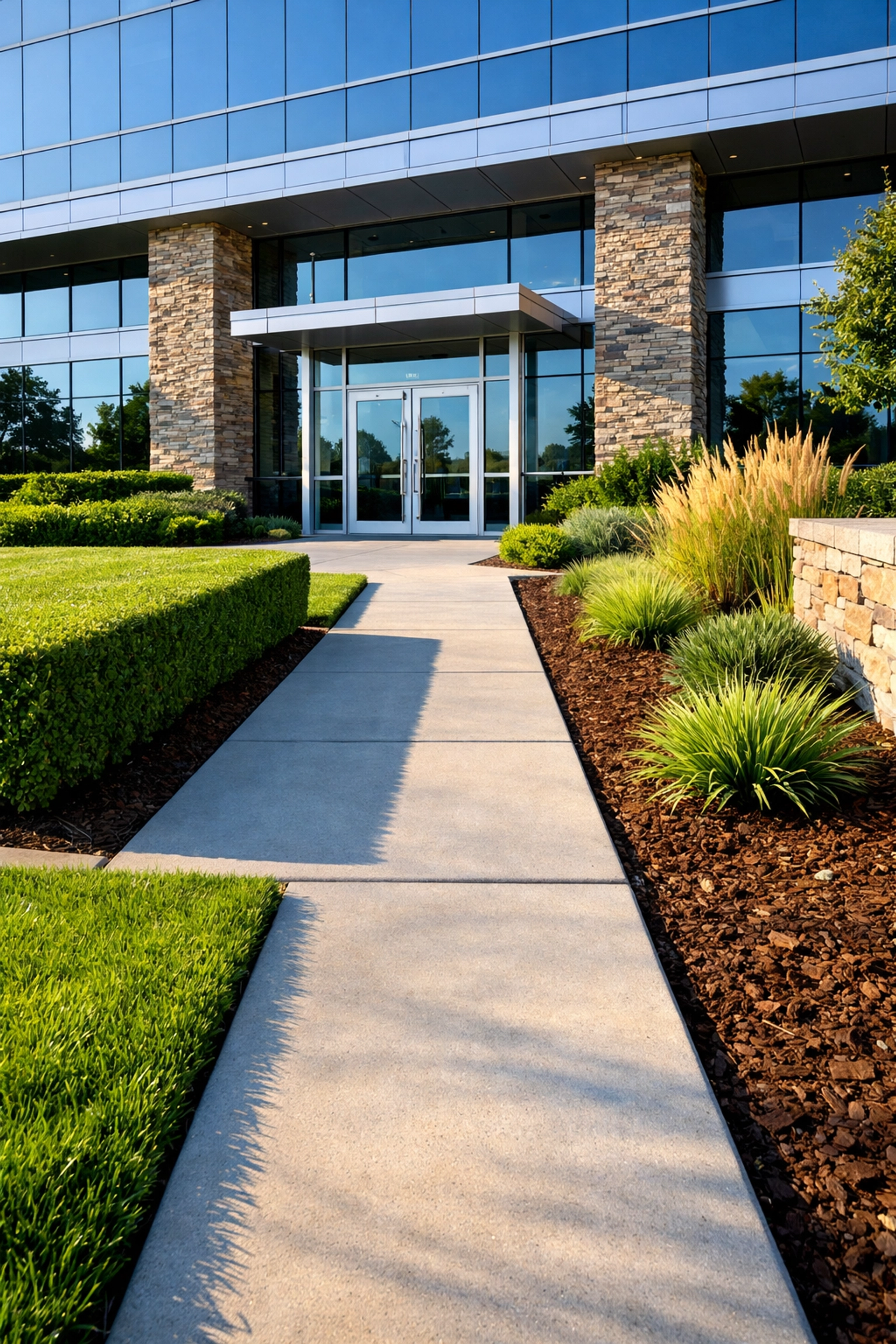
Modern commercial landscaping in Northeast Ohio isn't about elaborate gardens or high-maintenance flower beds. It's about smart design that looks polished year-round with minimal disruption to tenants:
- Clean lines and defined edges around walkways, parking areas, and building entrances
- Native plantings that thrive in Ohio's clay soil and handle our freeze-thaw cycles without constant replacement
- Strategic hardscaping like natural stone accents or updated retaining walls that frame the property
- Healthy, uniform turf that's actually maintained (not just mowed occasionally)
Here's the ROI reality: tenants notice when competitors down the road have fresher exteriors. A Cleveland State University study found that commercial properties with professional landscape maintenance saw tenant retention rates 23% higher than comparable properties with basic or inconsistent upkeep. When lease renewal time comes around, your landscaping either reinforces their decision to stay or gives them one more reason to explore options.
The Beachwood Factor
Beachwood commercial tenants: whether they're medical practices near University Hospitals, corporate offices, or retail businesses: expect a certain standard. The city itself maintains high aesthetic standards. When your property doesn't match that expectation, you're fighting an uphill battle at renewal time.
Professional landscaping signals that you're the kind of property owner who sweats the details. If you care about the grounds, tenants assume you'll also respond quickly to HVAC issues, parking lot repairs, and other operational needs.
2. Strategic Safety Features That Reduce Liability and Build Trust
Safety isn't glamorous, but it's where commercial landscaping directly protects your wallet and reputation.

Snow and Ice Management: The Non-Negotiable
Let's talk about the elephant in the room: Northeast Ohio winters. Beachwood sees an average of 68 inches of snow annually, and the freeze-thaw cycles create ice hazards that can shut down parking lots for days.
A slip-and-fall lawsuit from a tenant's employee or customer can cost anywhere from $30,000 to $100,000+ in settlements and legal fees. Beyond the financial hit, nothing damages tenant relationships faster than preventable safety incidents.
Modern commercial snow management includes:
- Pre-treatment strategies before storms hit (not just reactive plowing)
- 24/7 monitoring during weather events
- Detailed documentation of every service visit (critical for liability protection)
- Strategic ice melt application that doesn't damage landscaping or create runoff issues
We've covered commercial snow management extensively in our ultimate guide, but here's the key point: tenants don't care about your snow removal strategy until it fails. When it works flawlessly, it's invisible. When it doesn't, it becomes the only thing they talk about.
Year-Round Safety Considerations
Winter safety gets the headlines, but modern landscaping addresses safety gaps throughout the year:
Proper drainage management prevents water pooling in walkways and entryways. In Beachwood's clay-heavy soil, poor drainage doesn't just create puddles: it destabilizes pavement and creates tripping hazards.
Strategic lighting coordination between landscape design and exterior lighting ensures pathways remain visible after dark. This matters especially for office properties where employees arrive early or leave late during winter months.
Regular maintenance schedules catch potential hazards before they become problems: overgrown shrubs blocking sightlines at parking lot entrances, tree branches threatening overhead lines, or uneven walkways from root intrusion.
When tenants see consistent attention to these details, it builds trust. They're not wondering if something will get handled: they know it will.
3. Year-Round Maintenance That Proves Long-Term Commitment
Here's what separates modern commercial landscaping from the "guy with a truck" approach: consistency across all four seasons.
Beachwood tenants notice when properties look sharp in May but turn into overgrown messes by August. They notice when fall cleanup doesn't happen until December. And they definitely notice when spring arrives but the property still looks like winter.
The Four-Season Approach
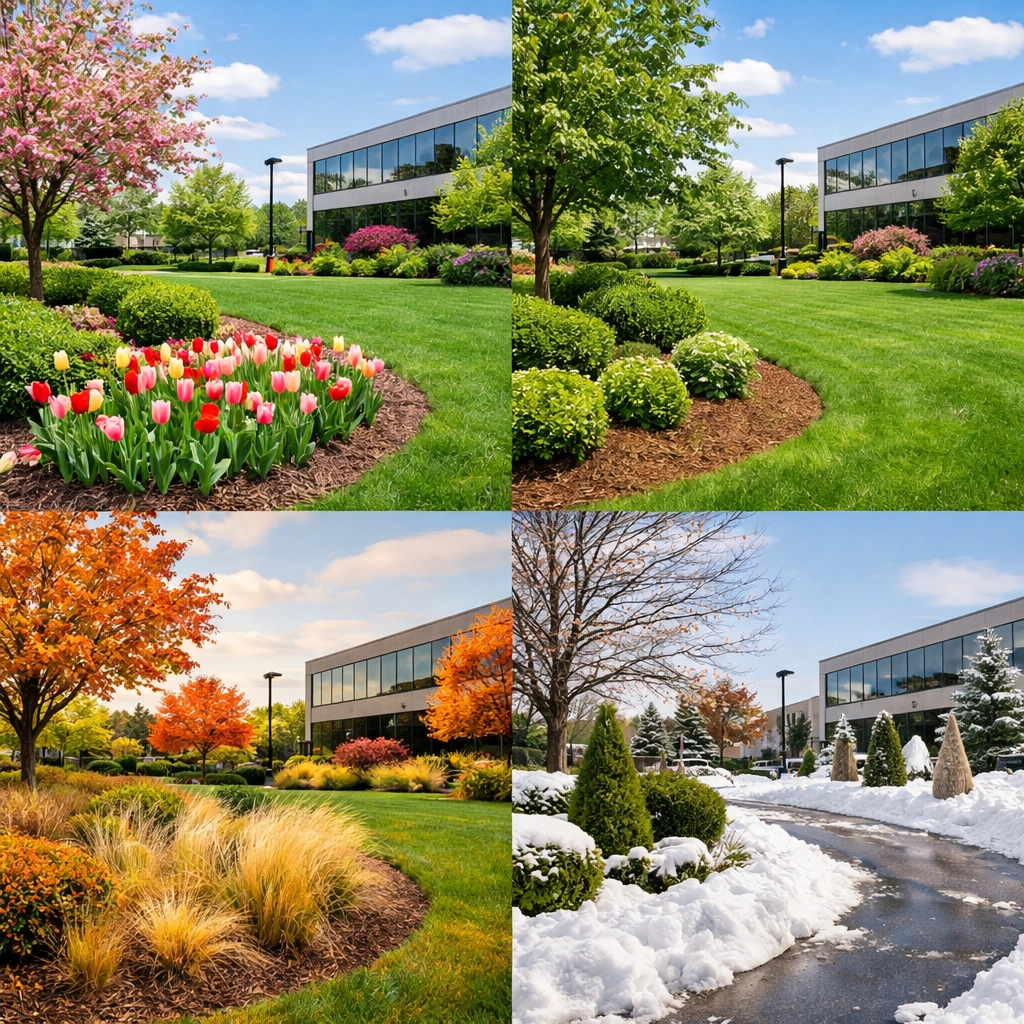
Spring (March-May): This is cleanup season. Removing winter damage, addressing any drainage issues that revealed themselves during snow melt, pruning back dead growth, and refreshing mulch beds. Properties that skip or delay spring cleanup start the growing season already behind.
Summer (June-August): Consistent maintenance is everything. Regular mowing, edging, irrigation management, and pest control. In Northeast Ohio's humid summers, properties can go from "maintained" to "overgrown" in two weeks if service schedules slip.
Fall (September-November): Strategic preparation for winter. Aerating and overseeding turf areas, final fertilization, leaf management, and protecting sensitive plantings. The properties that look best in April are the ones that did the work in October.
Winter (December-February): Beyond snow management, this is when smart property owners handle winter-specific maintenance like pruning, planning for spring improvements, and addressing any drainage or grading issues before the next growing season.
Why Consistency Matters for Retention
When your landscaping looks professional 12 months a year, you're sending a specific message: this property has stable, committed ownership. That matters more than most property managers realize.
Commercial tenants want stability. They're not just renting space: they're building their business presence. A tenant who sees consistent, professional property management is far less likely to entertain competitor offers when renewal time approaches.
The properties that struggle with retention are usually the ones where maintenance is reactive rather than strategic. The lawn gets mowed eventually. Snow gets cleared most of the time. Issues get addressed when someone complains.
That approach might keep the property functional, but it doesn't inspire lease renewals.
The Real ROI: Lower Turnover and Higher Value
Let's bring this back to numbers that matter.
Average commercial tenant turnover costs between $10,000 and $50,000 depending on space size: marketing costs, broker fees, downtime, tenant improvement allowances, and the time your team spends on the process.
If professional landscaping reduces your turnover by just one tenant every few years, it pays for itself many times over. Factor in reduced liability from safety improvements and the incremental property value increase from maintained exterior spaces, and the ROI becomes even clearer.
Beachwood commercial properties compete in a market where tenants have options. The properties that consistently retain quality tenants are the ones that treat landscaping as infrastructure, not decoration.
Ready to Upgrade Your Commercial Property?
If your Beachwood commercial property needs a landscaping partner who understands both the aesthetic and practical demands of tenant retention, we'd love to talk.
At LeafStone Landscapes, we specialize in commercial properties that need reliable, year-round exterior management: from strategic design to snow management to consistent maintenance that keeps tenants happy.
Contact us today to discuss how we can help your property stand out in Beachwood's competitive market, or explore our commercial services to see what modern commercial landscaping actually looks like in practice.
Your tenants are making judgments about your property every single day. Make sure those judgments work in your favor.