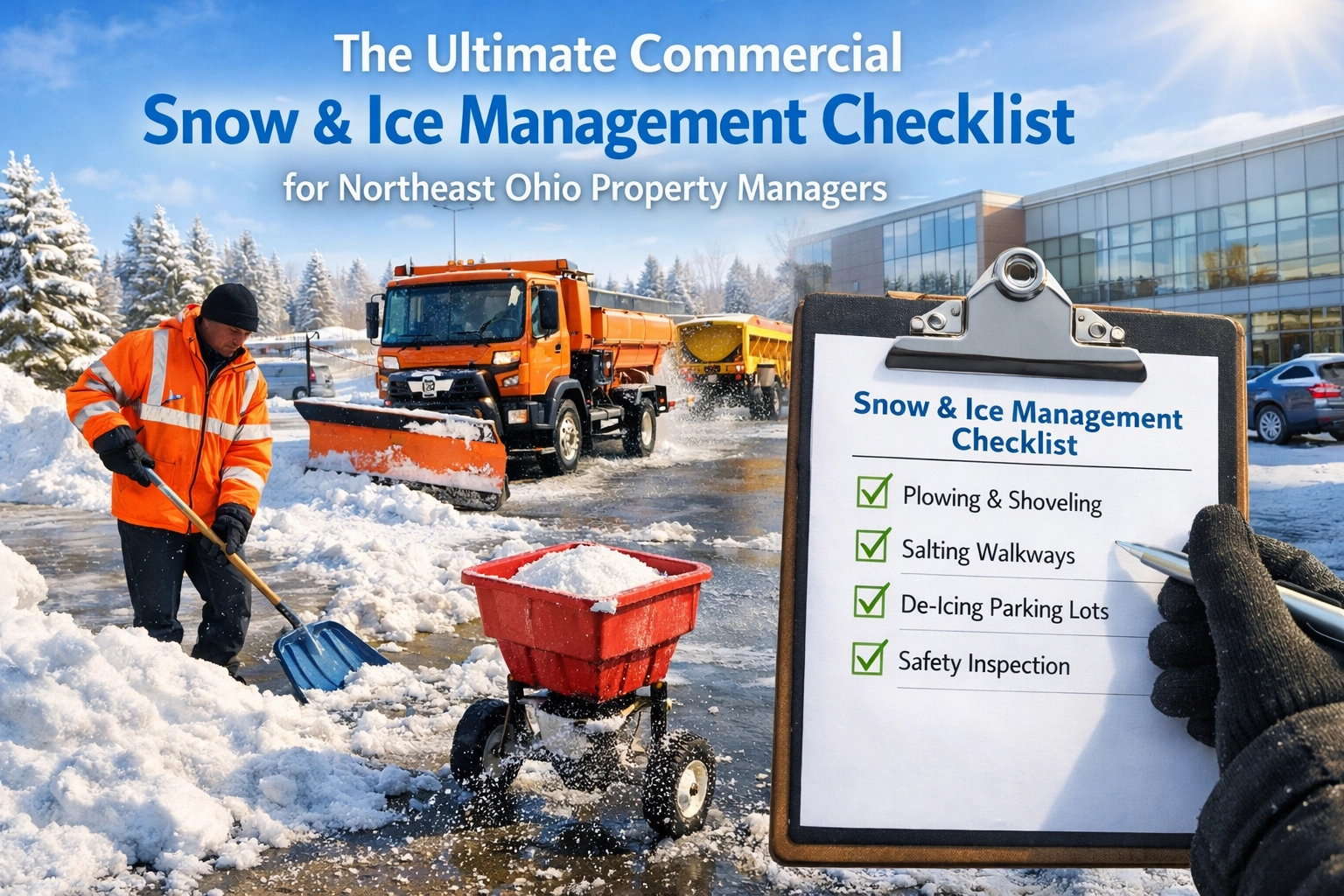
The Ultimate Commercial Snow & Ice Management Checklist for Northeast Ohio Property Managers
Northeast Ohio winters don't mess around. With an average annual snowfall of 68 inches and weather patterns that can shift from mild to blizzard conditions overnight, commercial property managers face unique challenges that demand more than just reactive snow removal. One slip-and-fall lawsuit can cost tens of thousands of dollars: not to mention the damage to your property's reputation.
Whether you manage office complexes, retail centers, or industrial facilities, a comprehensive snow and ice management plan isn't optional. It's essential. This checklist will help you prepare for winter's worst and protect both your tenants and your bottom line.
Pre-Season Planning: August Through October
The most successful winter management programs start long before the first snowflake falls. Here's what you need to accomplish during the pre-season:
Conduct a Thorough Property Assessment
Walk every square foot of your property with a critical eye. Identify high-traffic pedestrian areas, loading docks, emergency exits, and accessible parking spaces: these become your priority zones. Look for drainage issues that could create ice patches, areas prone to drifting snow, and aging pavement that might not handle aggressive plowing.
Document everything with photos and notes. This assessment becomes the foundation of your site map and service plan.

Clarify Responsibilities Early
Commercial properties face stricter snow clearance timeframes than residential properties. In many Northeast Ohio municipalities, you're expected to clear sidewalks within hours of snowfall ending: not days. Review your local ordinances and document specific requirements.
If you lease to multiple tenants, create written agreements specifying who handles what. Confusion about responsibilities during a 2 a.m. snowstorm creates dangerous gaps in coverage.
Select Your Snow Removal Partner
In Northeast Ohio, commercial snow removal contracts typically run from December 1st through March 31st. However, Mother Nature doesn't always respect those dates. Remember "Snowtober" events that catch everyone off guard? Build flexibility into your contract timeline.
When vetting providers, don't just compare pricing. Ask about their equipment backup plans, average response times, and how they handle simultaneous events when every property needs service at once. Request references from similar commercial properties and verify their insurance coverage meets your requirements.
Site Mapping & Priority Zones
A detailed site map is your operational blueprint when winter hits hard. Work with your snow removal provider to create a comprehensive map that includes:
- Priority Level 1: Emergency exits, accessible parking, main entrances, fire lanes
- Priority Level 2: Secondary entrances, delivery areas, pedestrian walkways
- Priority Level 3: Parking lot perimeter areas, landscaping access points
Mark designated snow storage locations clearly. You don't want plowed snow blocking dumpster access, creating sight line hazards, or damaging landscape beds. In tight urban properties, you may need to budget for off-site snow hauling when accumulation exceeds storage capacity.
Establish specific trigger depths that activate different service levels. A dusting requires different treatment than six inches of heavy, wet snow. Most commercial properties set triggers at 1 inch for initial plowing and salt application, with additional services deployed at higher accumulations.
Equipment & Material Selection
The right tools make all the difference when temperatures plummet and snow piles up.
De-Icing Materials: Beyond Basic Rock Salt
Standard rock salt works fine above 15°F, but Northeast Ohio regularly dips below that threshold. Consider these alternatives for extreme cold:
- Calcium chloride: Effective down to -25°F, works 2-4 times faster than rock salt, costs 2-4 times more
- Magnesium chloride: Less corrosive than calcium chloride, safer for concrete and vegetation
- Liquid pre-treatments: Applied before storms ($0.05-0.10 per square foot), prevents ice bonding to pavement, reduces total material needed by 30-50%
For properties with decorative pavers or aging concrete, environmentally preferred options like calcium magnesium acetate minimize surface damage despite higher costs (3-5 times standard salt prices).
Application Strategy Matters
More salt doesn't equal better results. Over-application wastes money, damages landscapes, and accelerates concrete deterioration. Industry best practices recommend:
- 2-3 pounds of rock salt per 1,000 square feet for light ice
- 3-4 pounds per 1,000 square feet for moderate conditions
- Pre-wetting salt with liquid brine increases effectiveness by 30%
Train your team or ensure contractors follow calibrated application rates. Random scattering creates environmental problems and inconsistent results.
Weather Mats & Surface Protection
Place commercial-grade weather mats at all building entrances, extending at least 12 feet in both directions. Inspect them regularly for curling edges that create tripping hazards. Budget for replacement every 2-3 seasons depending on foot traffic.

Documentation & Liability Protection
Here's an uncomfortable truth: despite your best efforts, someone may still slip and fall on your property. Comprehensive documentation becomes your legal shield.
Maintain Detailed Service Records
Create a snow and ice removal log that documents:
- Date and time of each weather event
- Snow accumulation amounts
- Services performed (plowing, salting, shoveling)
- Materials applied and quantities
- Completion times for each priority zone
- Weather conditions during and after treatment
- Photos of completed work
Whether you handle snow removal in-house or contract it out, this log provides crucial evidence if liability questions arise. Digital systems with GPS tracking and timestamped photos offer even stronger documentation.
Communication Protocols Save Lives
Establish clear channels for hazard reporting. Make it easy for tenants, employees, and visitors to report icy patches or other winter hazards immediately. Respond to reports within 30 minutes during business hours, faster for emergency situations.
Send regular updates to tenants about winter maintenance schedules, parking restrictions during plowing, and expected service completion times. Transparency builds trust and reduces liability exposure.
Contract Essentials & Cost Management
A well-written snow removal contract protects both parties and sets clear expectations.
Must-Have Contract Elements
Your agreement should specify:
- Guaranteed response times tied to weather severity
- Specific trigger depths for different service levels
- Ice management protocols including material types and application rates
- Communication requirements (who contacts whom, when)
- Time tracking and verification methods
- Dispute resolution procedures
- Pricing structure with all potential additional charges clearly outlined
Budget for Variables
Northeast Ohio winters vary wildly. Budget based on average snowfall but build in contingency for heavy years. Typical commercial snow management costs:
- Ice management: $45-75 per bag applied
- Snow hauling: $150-300 per hour
- Sidewalk hand clearing: $45-75 per man-hour
- Liquid pre-treatment: $0.05-0.10 per square foot
Seasonal contracts provide budget certainty but may cost 10-15% more than per-event pricing in light winters. Per-event pricing saves money in mild years but creates uncertainty. Choose based on your risk tolerance and budget flexibility.
Partner with Northeast Ohio Snow Management Experts
Winter in Northeast Ohio demands more than generic snow removal. It requires local expertise, commercial-grade equipment, and a commitment to proactive service that keeps your property safe and operational when it matters most.
At LeafStone Landscapes, we've spent years perfecting commercial snow and ice management strategies specifically for Northeast Ohio's challenging winter conditions. Our team understands the unique microclimates, municipal requirements, and liability concerns that property managers face.
Ready to stop worrying about winter liability and start focusing on your core business? Contact our team to discuss a customized snow and ice management plan for your commercial property. Let's build a winter strategy that protects your tenants, your property, and your peace of mind.